


What have you held, and what has held you? These are the questions visiting artist Erika Chong Shuch asks of her audience in her latest exhibition, 1,000 Ways to Hold, on display through Aug. 17 in the Wisch Family Gallery at the Anderson Collection.
Since October, Shuch – a Bay Area performance maker, choreographer, and director – has hosted workshops on campus, inviting students, faculty, staff, and the public to sit together and shape small bowls out of clay while reflecting on the people, places, objects, and experiences that are meaningful to them. The workshops were part of a project designed during her year-long residency at Stanford through the Office of the Vice President for the Arts. The project’s purpose, according to Shuch, is to encourage connection.
“There are a lot of people experiencing a profound sense of isolation and loneliness, and that is a theme in a lot of my work,” Shuch said, adding that physical activities, such as manipulating clay, can facilitate genuine communication.
“When we’re in conversation with others and simultaneously focused on a task, the quality of conversation shifts. It’s like a shortcut to something more meaningful. We can bypass a lot of small talk,” she said.
At her campus workshops, each participant was given a ball of clay and design tools, and then asked to share what they’ve held or what’s held them. Their answers were recorded. Shuch ultimately worked with hundreds of collaborators to create a variety of small, handmade bowls, which were later wood-fired. Together with the recorded responses, they serve as a collective artwork and digital archive.
Time, pets, and perfection
Many of the bowls are round, some are oblong or square, and others are shaped like stars, vases, or animals. One bowl is shaped like a building with windows. Another is in the shape of a person sitting crossed-legged and holding a bowl. Each bowl was placed on shelves in the Wisch Family Gallery.
Andrew Brodhead
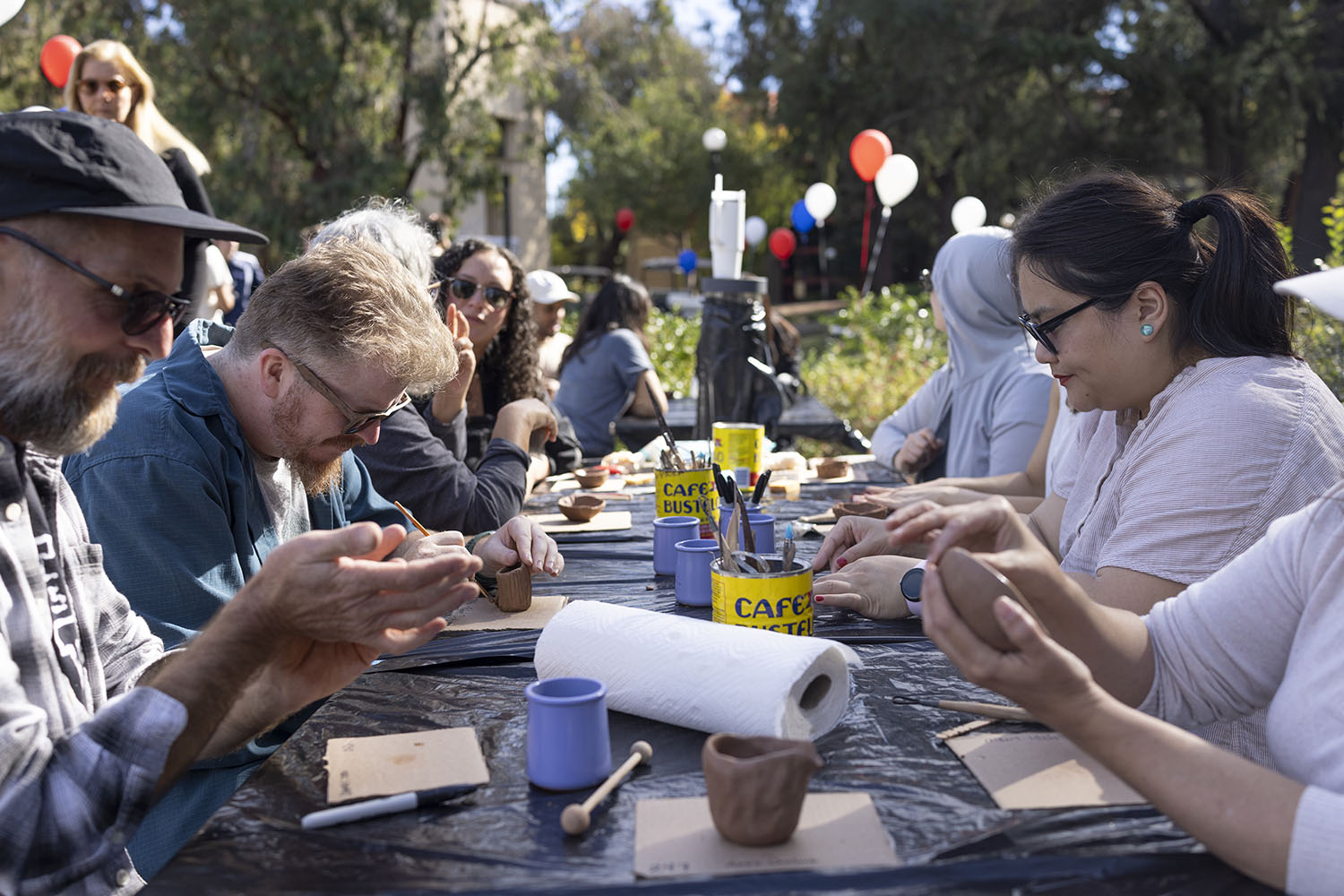
At a workshop, Stanford students, faculty, staff, and members of the public create bowls from clay.
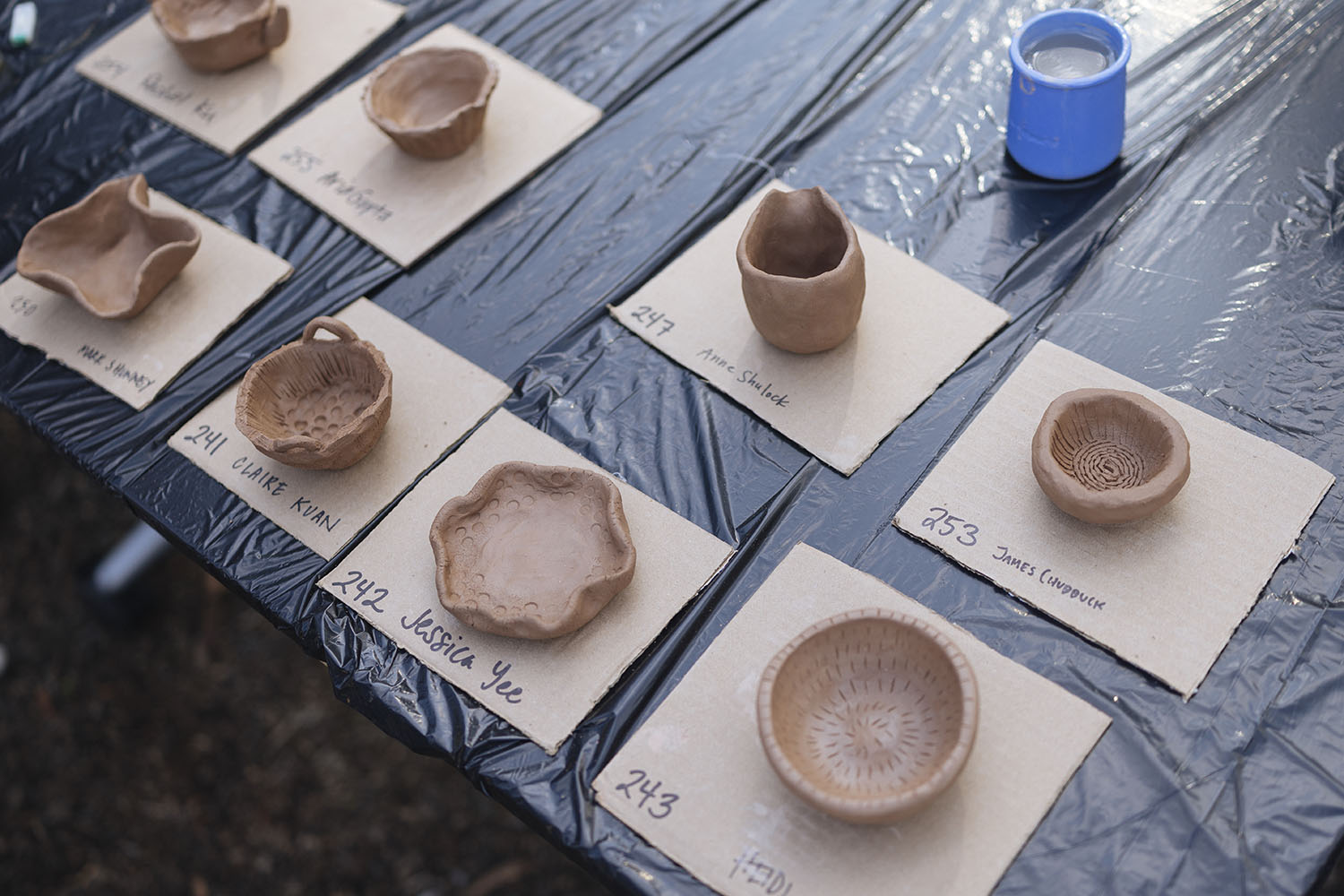
Bowls are paired with a recording of each maker answering the question, “What have you held?”
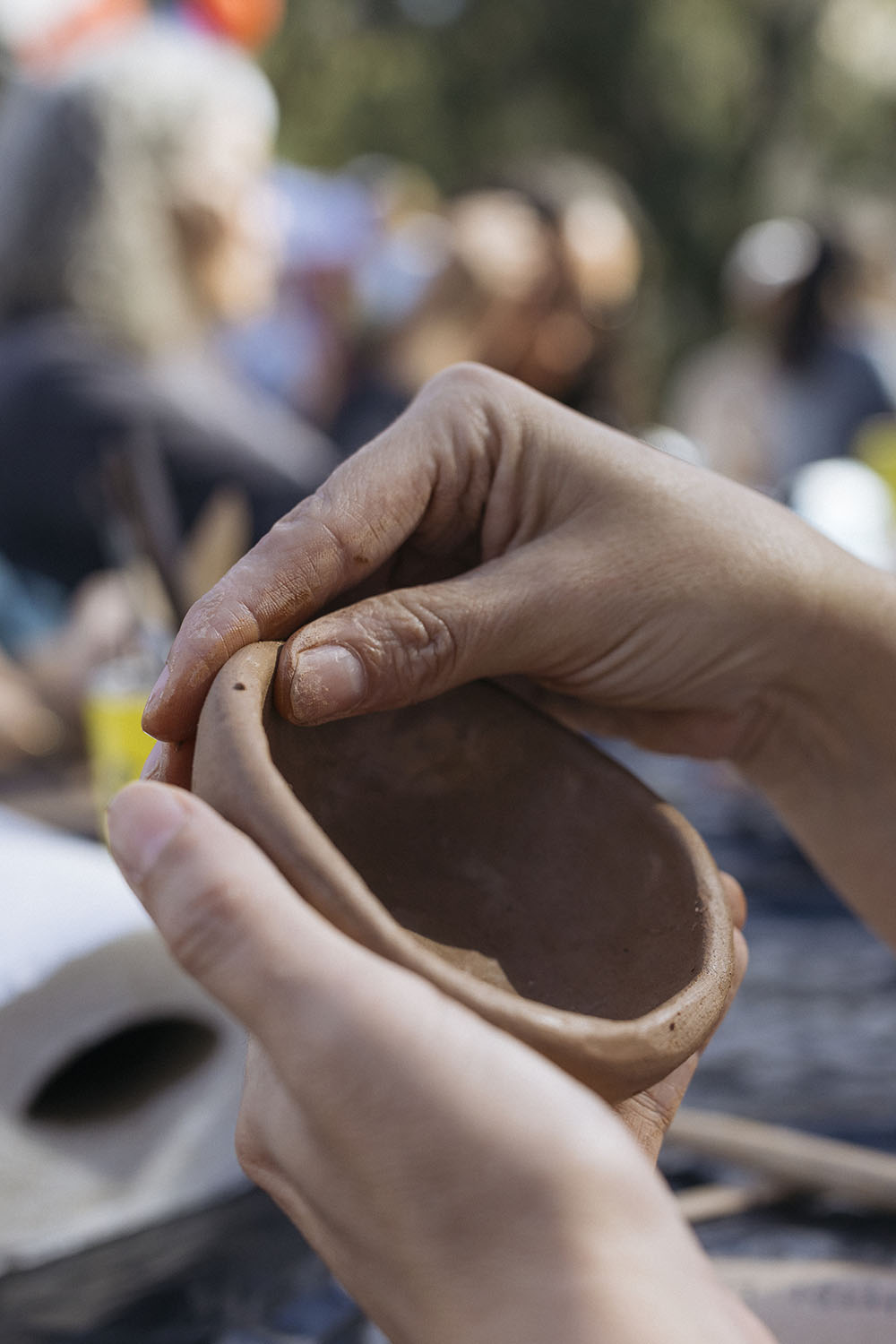
Artist Erika Chong Shuch said that physical activities, such as manipulating clay, can facilitate genuine communication.
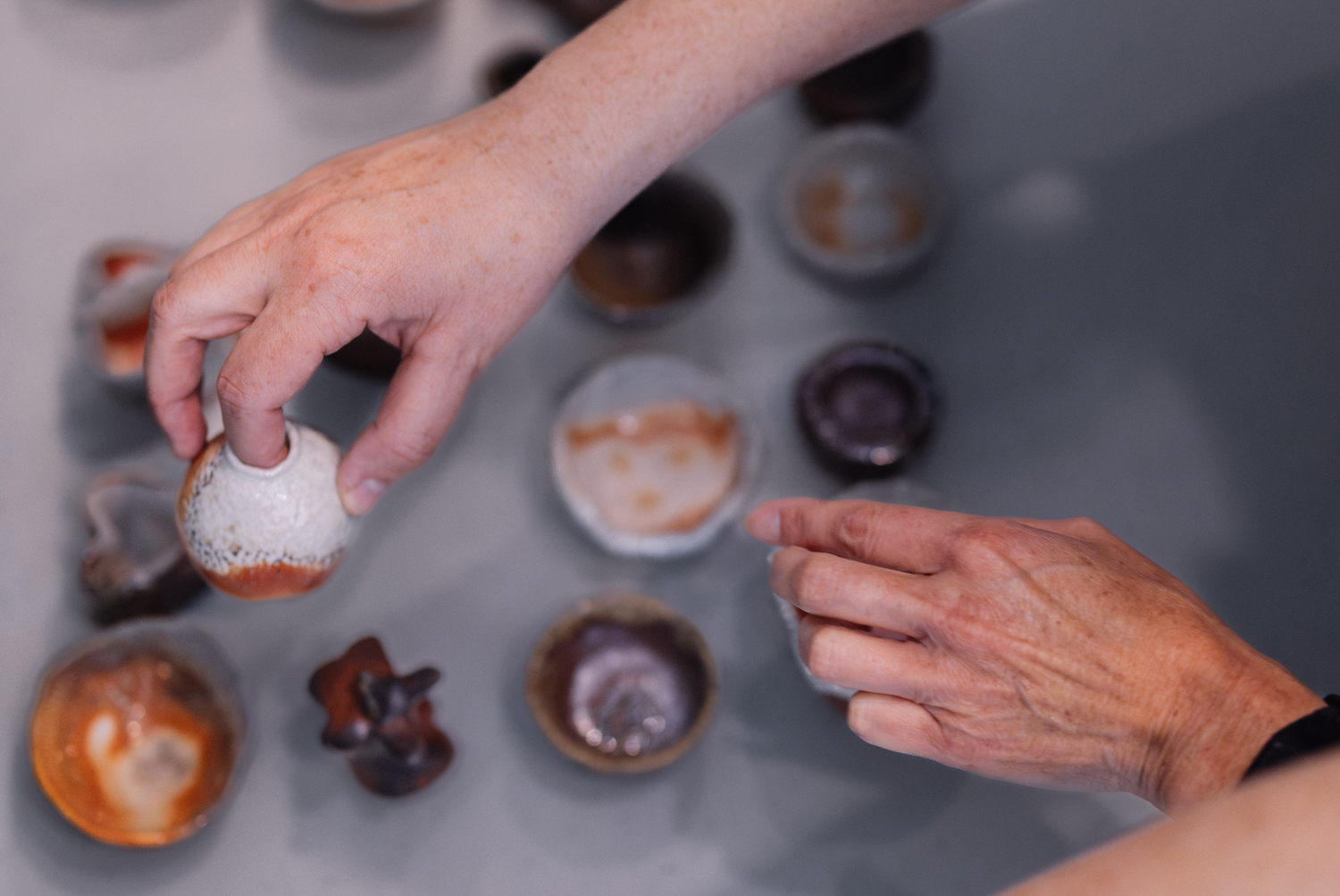
Once wood-fired, the ceramic bowls are ready for installation.
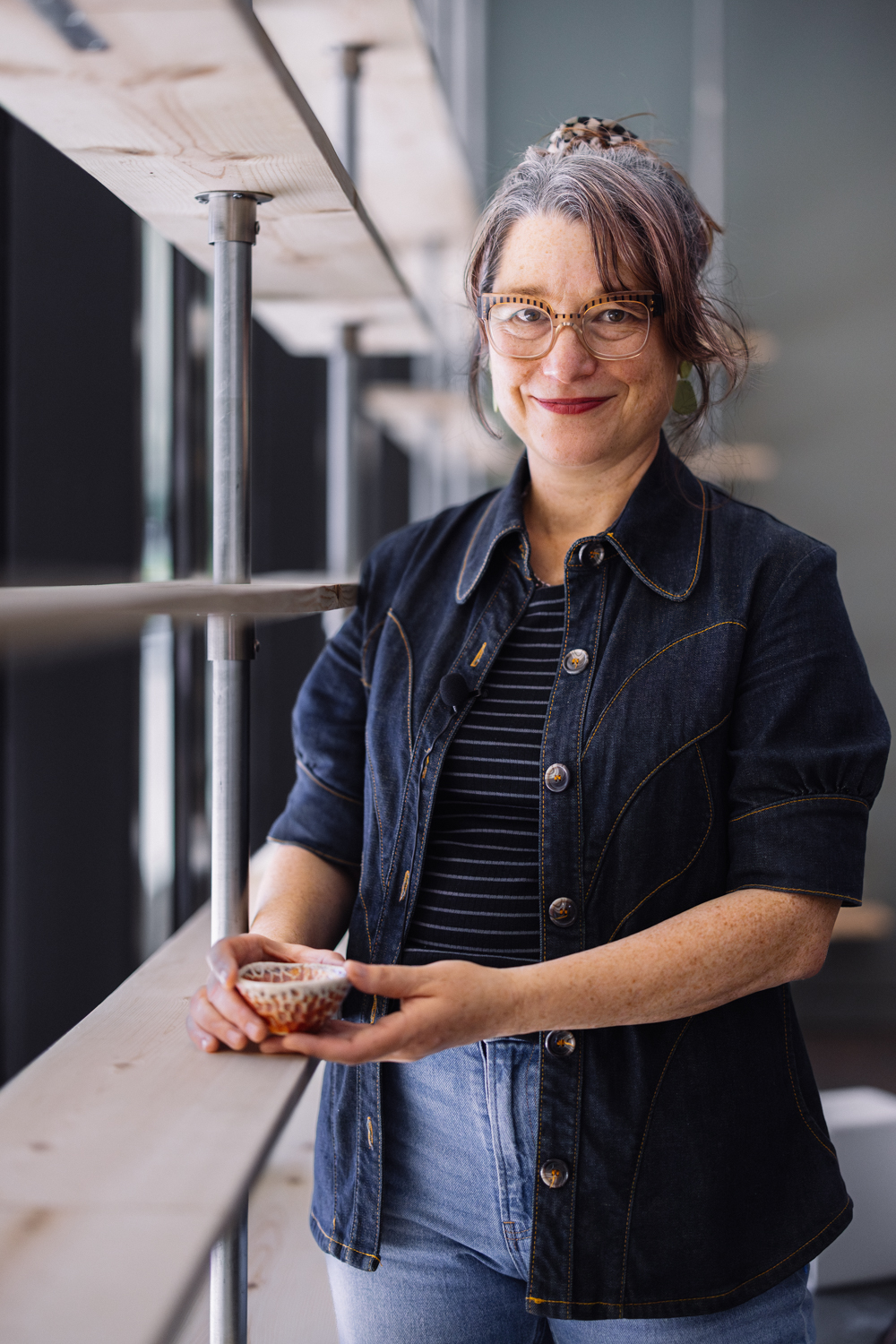
Shuch is a Bay Area artist whose work spans experimental performance and social practice, often inventing unexpected forms of audience engagement.
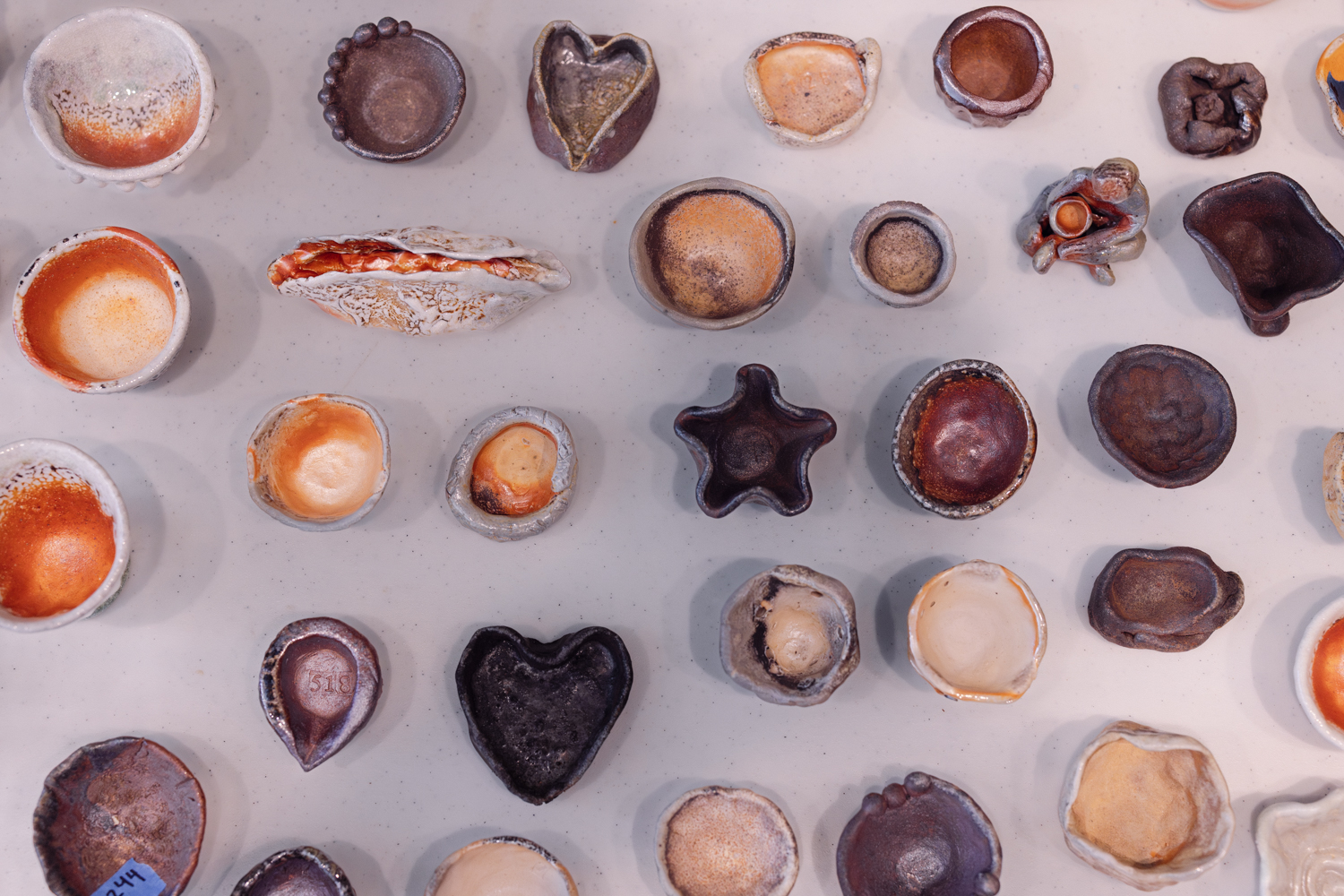
Bowls take many shapes, from stars to hearts to humans.
Next to the shelves is a large apparatus with speakers surrounding a pedestal, the top of which has a rotating, LED-lit, plexiglass surface. Visitors can remove a bowl from a shelf and place it on the glass. An RFID (radio-frequency identification) computer inside the pedestal reads data from a microchip on the bottom of each bowl, activating an audio playback of the maker’s personal reflection.
The recorded reflections touch on inspiring books, fulfilling relationships, achievements, and good health. Some participants held difficult experiences or memories of deceased relatives or pets. One participant made a bowl in the form of a watch, and reflected on how they hold time.
“I realized that I’ve been holding this sense that I have to constantly be doing something and be somewhere, and life has become that way for me. And I want to let that go. I just want to be present, so that’s why I made this watch, and I’m not going to let time dictate what I do. I’m going to just enjoy where I am.”
Another reflected on how they had been holding on to the pressure to be perfect. “It has pervaded my life … hopefully, during my time here I can let it go.”
Shuch executed the project with help from many Stanford staff and students with varied academic backgrounds ranging from physics to film studies. Several students participated through an independent study practicum, which was facilitated through the Stanford Arts Institute and its faculty director, Hideo Mabuchi, a professor of applied physics.
A collective story
Originally from San Jose, California, Shuch is now based in Berkeley. Her work spans experimental performance and social practice, often inventing unexpected forms of audience engagement.
“She’s the kind of artist we need right now. One that really understands how making art can bring us together in different ways,” said Vice President for the Arts Deborah Cullinan, adding that 1,000 Ways to Hold was also selected for its unique process.
“It isn’t just about the objects, it’s about how they were made, who made them, the stories that were told, and that collective story – the story of us as a community,” she said.
Cullinan said the project was chosen, in part, for its alignment with other efforts on campus to foster belonging and dialogue, such as Stanford ePluribus, a university-wide initiative to bolster civic engagement and constructive dialogue across the student experience.
Shuch’s residency is hosted by the Office of the Vice President for the Arts and co-sponsored by the Anderson Collection and the Office for Religious and Spiritual Life.
“I don’t know where else I would be able to get the support to test something like this out and create this archive of conversations with such a robust and diverse population,” Shuch said of her time at Stanford. “It’s pretty incredible.”
Writer
Alex Kekauoha